These are chains formed by bi-value cells (not necessarily bi-value cells with the same candidates). If the same number is present in the end cells of the chain, this same number can be excluded from the cell(s) that see both ends. It is noted in the literature that the chain should be made up of an even number of bi-value cells. Test with both numbers of the cell that start the chain.
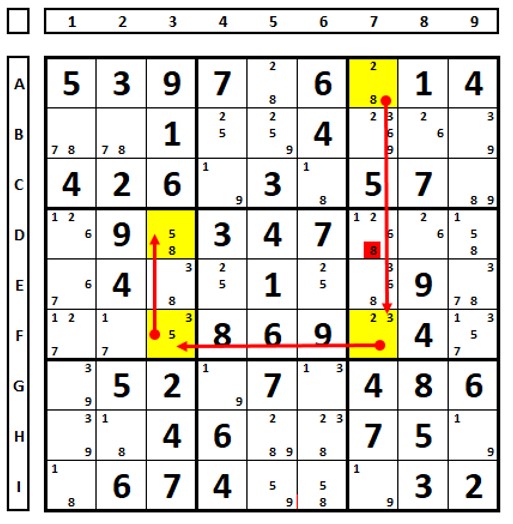
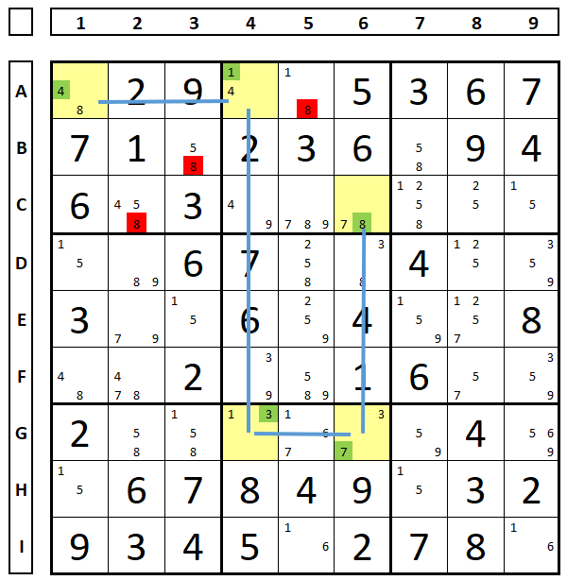
In the Sudoku below, any choice (2 or 8) in cell A7 will exclude the number “8” in cell D7. The same goes for starting with cell D3:
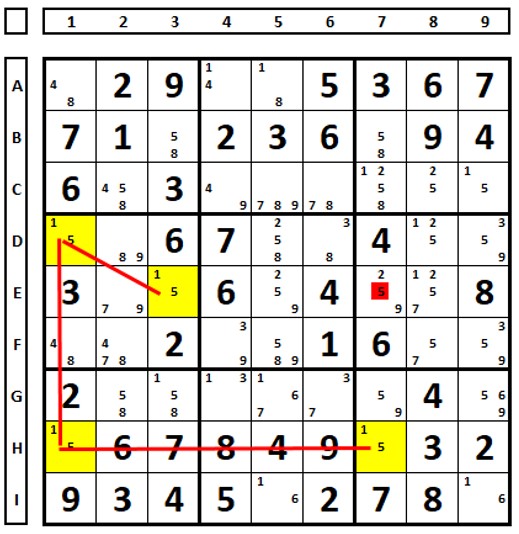
In the Sudoku below, any choice (1 or 5) in cell H7 will exclude the number “5” in cell E7:
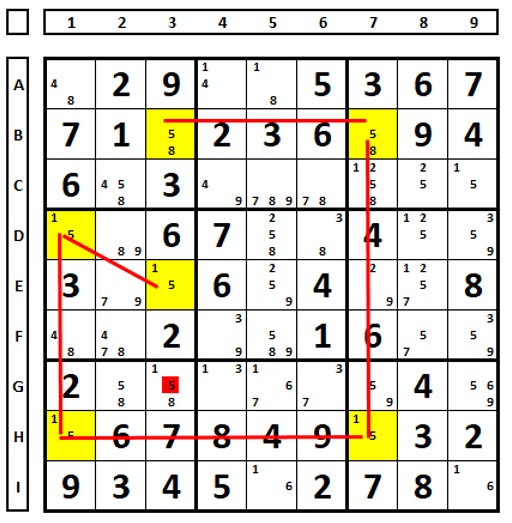
In the Sudoku below, choose the number “5” or “8” in cell B3 and the number “5” in G3 will be excluded:
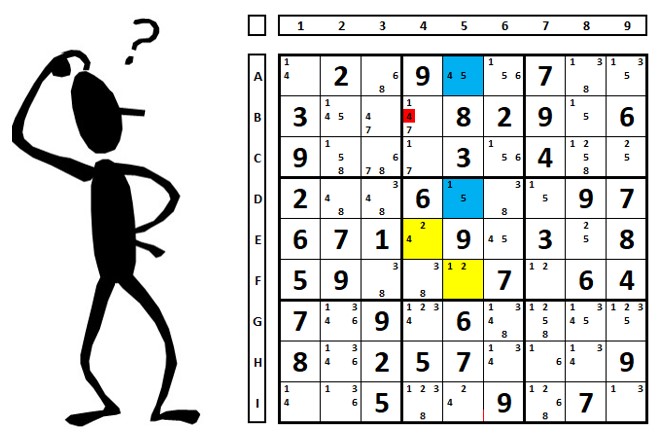
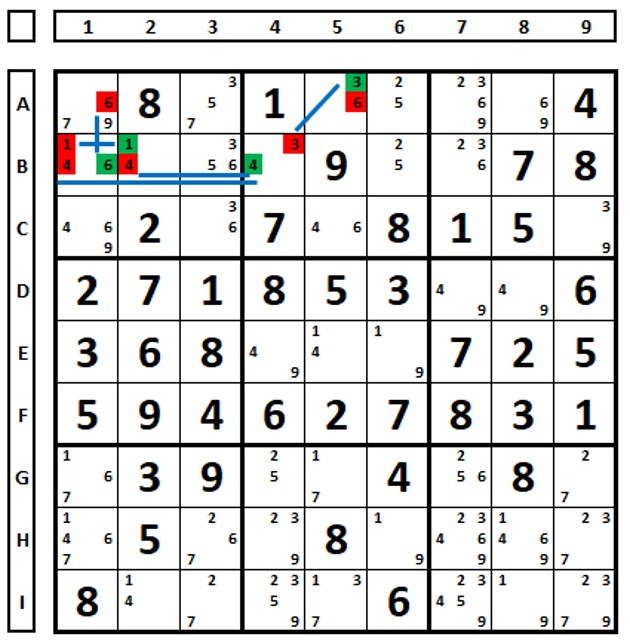
In the Sudoku below, any choice in cell A5 will exclude the number “6” in cell A1. When choosing the number “3”, this exclusion occurred, and if the number “6” were chosen, the same exclusion would occur. A warning, at this point, it is not known whether in cell A5 the number “3” or “6” is the solution for this Sudoku: